

Optical Network Units (ONUs) are the endpoints of a point-to-multipoint access network, usually connected to a Passive Optical Network (PON). There are three common types of ONUs, namely GPON ONU, EPON ONU, and XPON ONU. Each type of ONU has its own advantages and disadvantages, and they are used in different scenarios. Now let's discuss the difference between Gpon ONUand Xpon ONU.
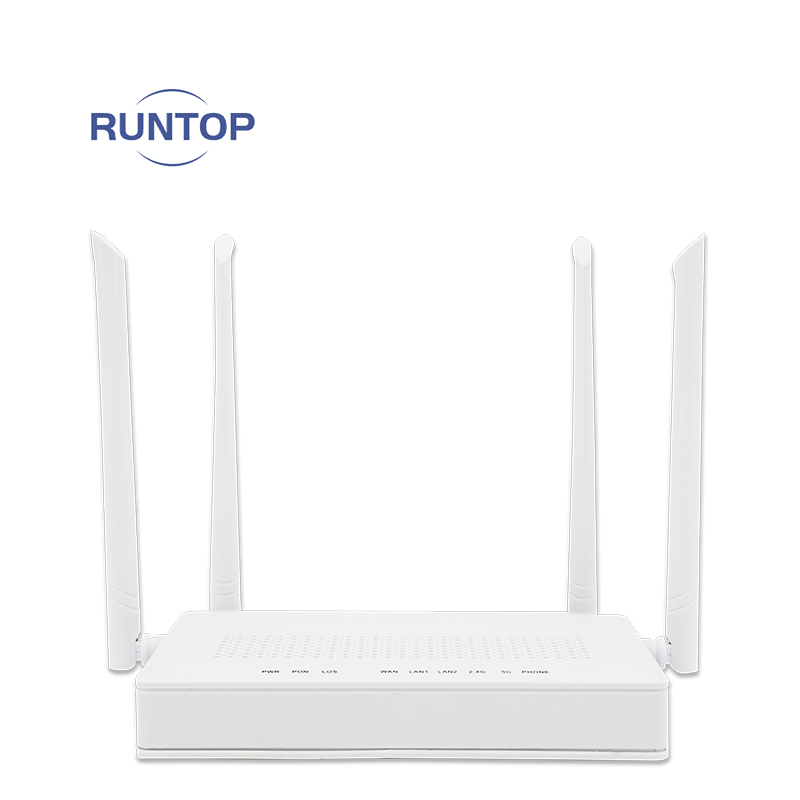
GPON (Gigabit Passive Optical Network) is a single, well-established standard for delivering high-speed internet over fiber networks. It generally offers higher downstream speeds (e.g., 2.5 Gbps) and lower upstream speeds (e.g., 1.25 Gbps), which is ideal for internet services that prioritize content delivery to users.
GPON utilizes WDM to carry multiple services on a single fiber and GPON ONUs are suitable for residential and small business Fiber-to-the-Home (FTTH) deployments
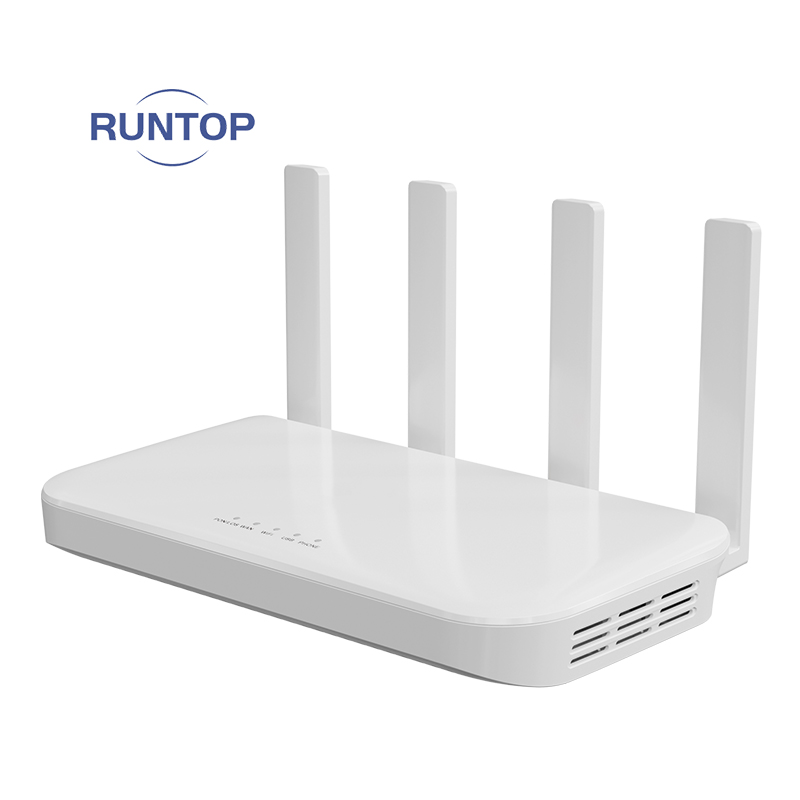
XPON is a general term that can refer to a variety of newer PON technologies, such as XG-PON (10G-PON) and XGS-PON (Symmetric 10G-PON), or devices that are compatible with multiple standardsMany XPON ONUs are designed as "dual-mode" devices, meaning they can function in both GPON and EPON (Ethernet PON) modes, offering greater flexibility and compatibility with existing network infrastructure
Some XPON variants, like XGS-PON, offer significantly higher symmetrical speeds (e.g., 10 Gbps up and 10 Gbps down), making them suitable for demanding applications like video conferencing and online gamingXPON devices can identify the access type (GPON or EPON) and provide a unified network management platform for different PON technologies, simplifying network administrationXPON uses advanced technologies, like proprietary encapsulation for voice, to improve efficiency and reduce latency compared to older standards
In general,GPON ONUs offer asymmetric speeds (2.5G/1.25G) and are cost-effective for residential broadband, while XPON ONUs (XGS-PON/10G-EPON) deliver symmetric 10G speeds, enabling future-proof solutions for 5G and enterprise use. XPON uses different wavelengths (1577nm/1270nm) and is backward-compatible in hybrid networks, whereas GPON (1490nm/1310nm) works only with GPON OLTs. Operators should choose GPON for budget deployments and XPON for high-bandwidth scalability.