

As modern broadband demands continue to escalate—driven by 4K/8K video streaming, cloud computing, remote work, and smart home applications—telecom operators face the challenge of delivering high-speed, reliable connectivity while balancing cost, coverage, and scalability. HFC (Hybrid Fiber-Coaxial) and FTTH (Fiber-to-the-Home) are two dominant access technologies, each with unique strengths. Contrary to the misconception that one will replace the other, their coexistence has become a strategic choice for operators, leveraging respective advantages to meet diverse user needs across urban, suburban, and rural areas.
HFC networks, built on existing coaxial cable infrastructure, excel in cost-effective coverage of dense urban and suburban communities. They offer a seamless upgrade path via DOCSIS 4.0, enabling gigabit speeds that rival FTTH in many scenarios. A key component enabling this coexistence is the Hfc Optical Node, which acts as a bridge between fiber trunk lines and coaxial distribution networks. This device converts optical signals from the operator’s central office into electrical signals for coaxial transmission to end users, ensuring compatibility with legacy coaxial infrastructure while supporting high-speed data services. For operators, repurposing existing coaxial lines with Hfc Optical Node reduces deployment costs compared to full FTTH overbuilds, making it ideal for upgrading mature neighborhoods.
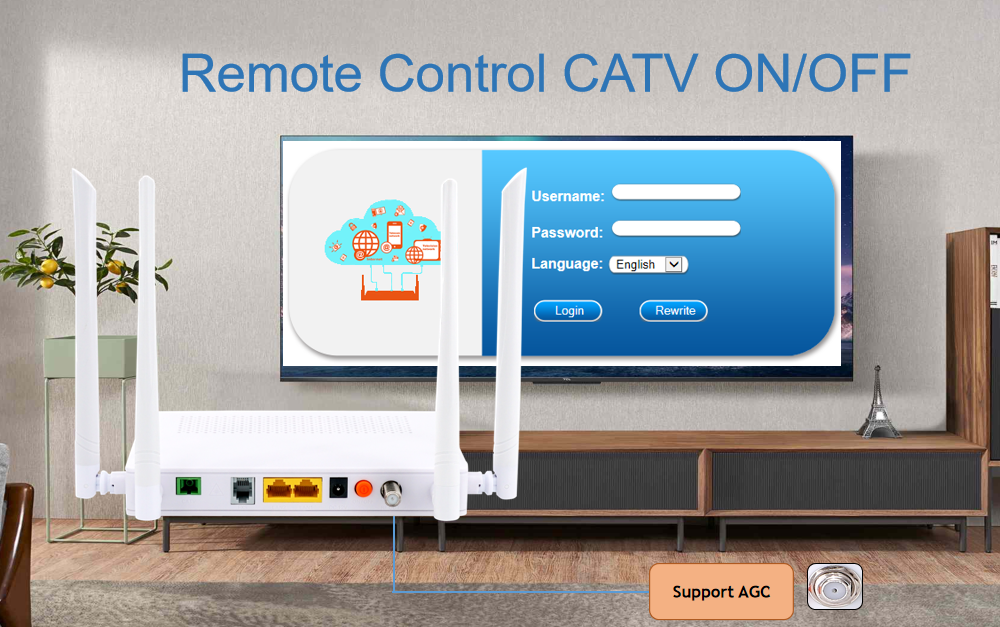
FTTH networks, by contrast, deliver unmatched bandwidth, low latency, and long-term scalability—critical for meeting the most demanding modern broadband needs, such as 10G gigabit services and future smart city applications. FTTH’s strength lies in its direct fiber connection to the home, eliminating signal degradation associated with coaxial cables. The FTTH Optical Node plays a pivotal role in this ecosystem, facilitating the distribution of optical signals from OLT devices to individual ONUs (Optical Network Units) at user homes. This node ensures efficient signal splitting and stable transmission, supporting hundreds of users per fiber link while maintaining consistent performance. FTTH is particularly well-suited for new residential developments and areas where users demand the highest possible speeds.
The coexistence of HFC and FTTH is further enhanced by complementary deployment strategies, allowing operators to optimize resource allocation. HFC is deployed in areas with existing coaxial infrastructure, minimizing investment and accelerating service delivery. FTTH is prioritized for new builds and high-demand areas, ensuring future-proof connectivity. This hybrid approach ensures that no user is left behind—rural areas with limited infrastructure can benefit from HFC’s cost-effectiveness, while urban users can access FTTH’s premium speeds. Operators also leverage network virtualization and unified management systems to seamlessly integrate HFC and FTTH, providing a consistent user experience regardless of the access technology.
Another key factor in their coexistence is the flexibility to adapt to evolving demands. As broadband needs grow, HFC can be upgraded to DOCSIS 4.0 to deliver gigabit speeds, while FTTH can scale to 10G-PON and beyond. The FTTH Node, a streamlined variant of the FTTH Optical Node, is often used in rural or low-density areas, offering a compact, cost-effective solution for extending FTTH coverage. This adaptability allows operators to balance short-term cost savings with long-term scalability, ensuring their networks can keep pace with emerging technologies like 5G backhaul and IoT connectivity.