

In modern fiber optic networks, efficient signal distribution is critical to delivering reliable, high-speed connectivity across homes, businesses, and data centers. As networks expand to support more devices and bandwidth-intensive applications—from 5G and IoT to cloud computing—signal integrity and uniform distribution become increasingly challenging. The Optic PLC Splitter Cassette Insertion Box emerges as a key solution, designed to streamline signal distribution, minimize loss, and enhance overall network performance. Unlike traditional setups, this integrated device creates a centralized, efficient system for managing fiber optic signals, addressing the core pain points of signal management.
One of the primary ways this device improves signal distribution is by reducing signal loss during splitting and transmission. PLC splitter is known for its precise signal division, but its performance can be compromised without proper housing and connection management. The integrated box provides a secure environment that safeguards the splitting component and fiber connections, preventing dust, moisture, and physical damage that can degrade signal quality. By maintaining stable connections and minimizing attenuation, it ensures that split signals retain their strength, even when distributed to multiple endpoints.
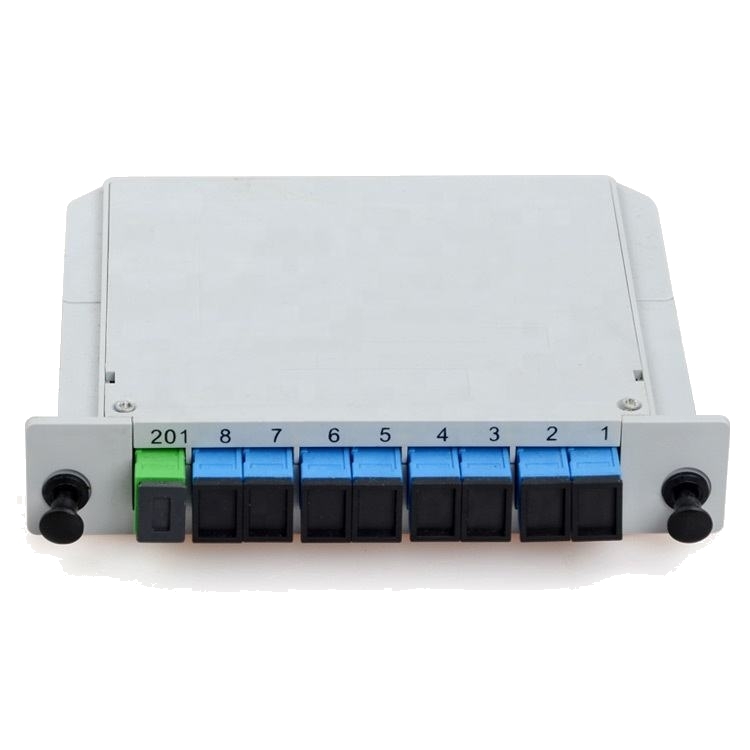
Centralization is another key advantage that enhances signal distribution efficiency. The device acts as a central hub for signal splitting and distribution, eliminating the need for scattered splitter components and disorganized fiber routing. This centralized design simplifies network management, allowing technicians to easily monitor, maintain, and troubleshoot signal paths. When paired with EPON OLT, it further optimizes signal transmission, ensuring that data flows seamlessly from the central office to end users, reducing latency and improving overall network responsiveness.
This device also supports flexible and scalable signal distribution, adapting to the growing needs of modern networks. As network demands increase—whether adding more users, expanding coverage, or upgrading to higher bandwidth—it can accommodate additional splitting components or fiber lines without disrupting existing signal distribution. Its modular design allows for easy insertion and replacement of core splitting cassettes, making it simple to scale the system as needed. This flexibility ensures that signal distribution remains efficient and reliable, even as the network grows in size and complexity.
Furthermore, it improves signal consistency across all distributed endpoints. Traditional setups featuring optical splitter often suffer from uneven signal distribution, with some endpoints receiving weaker signals due to poor routing or connection issues. This integrated device’s precision engineering and organized fiber management ensure that each split signal is delivered with uniform strength, eliminating discrepancies that can cause connectivity issues, slow speeds, or dropped signals. This consistency is essential for applications that require reliable, high-quality signal delivery, such as video streaming, real-time data transfer, and enterprise communication systems.