

In today’s digital age, high-speed data transmission is the backbone of industries ranging from telecommunications to cloud computing. Businesses and service providers rely on stable, fast connectivity to support operations, and the right components play a critical role in achieving this. One such essential component is the Adapter, a small but powerful device that ensures seamless connection between fiber optic cables and other network equipment. Its role in maintaining signal integrity and enabling efficient data flow cannot be overstated, making it a cornerstone of modern fiber optic networks.
Reliability is a top priority for any network, and fiber optic Adapters deliver exceptional performance in this regard. Unlike traditional copper connectors, these adapters are designed to minimize signal loss and interference, even in harsh environments. They feature precision engineering that ensures a tight, secure connection, reducing the risk of data drops or delays. This reliability is particularly crucial for applications like video conferencing, real-time data analytics, and cloud storage, where even minor disruptions can lead to significant losses. By providing a stable connection point, Adapters help businesses maintain consistent performance across their entire network infrastructure.
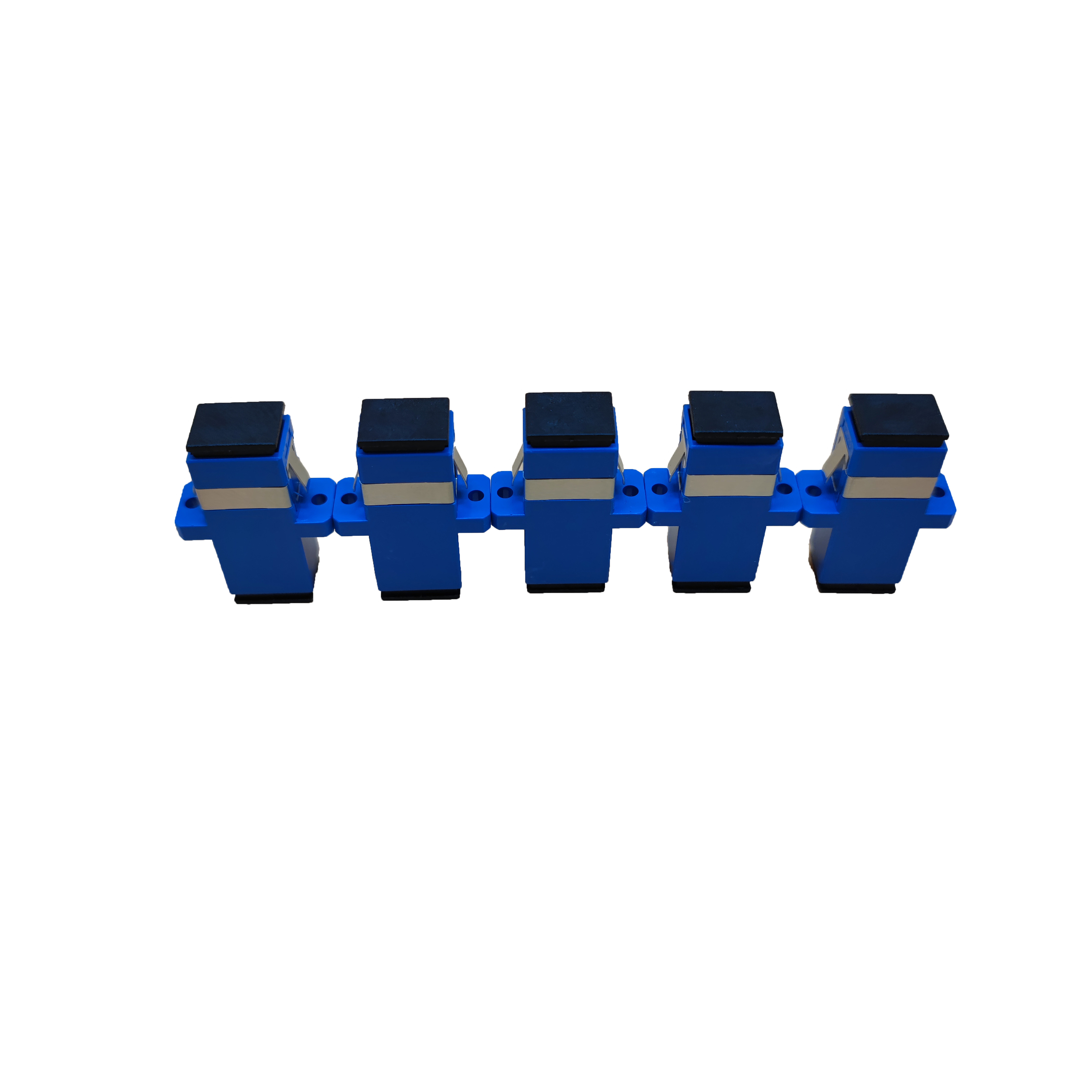
When it comes to scaling network capacity, compatibility and flexibility are key. Fiber optic Adapters support a wide range of fiber types, including single-mode and multi-mode, and are compatible with various connector styles such as LC, SC, and ST. This versatility allows network operators to easily expand their systems without replacing existing infrastructure. Additionally, when paired with components like the fiber plc splitter, Adapters enable efficient signal distribution, allowing a single fiber line to serve multiple devices or locations. This combination not only reduces installation costs but also simplifies network management, making it easier to adapt to changing business needs.
The fiber plc splitter is a vital component in passive optical networks (PONs), working alongside Adapters to split a single optical signal into multiple paths. This synergy is especially valuable for internet service providers (ISPs) and enterprise networks, where maximizing bandwidth efficiency is essential. By integrating Adapters with fiber plc splitters, networks can deliver high-speed internet and data services to more users simultaneously, without compromising on speed or reliability. This integration also supports the growing demand for bandwidth-intensive applications like 5G, IoT, and 4K video streaming.
Another key advantage of fiber optic Adapters is their durability and long service life. Constructed from high-quality materials like ceramic or metal, they are resistant to corrosion, dust, and physical damage. This robustness ensures that they can withstand the rigors of industrial settings, data centers, and outdoor installations. When combined with regular maintenance, Adapters can operate effectively for years, reducing the need for frequent replacements and lowering long-term operational costs. This durability is further enhanced when used in conjunction with reliable optical splitter components, creating a network that is both resilient and cost-effective.