

As 5G network coverage continues expanding across urban and suburban regions, stable low-latency signal transmission has become a fundamental requirement for fronthaul infrastructure. Massive 5G base stations rely on fiber links to realize data exchange between remote radio units and centralized equipment. Signal attenuation inevitably occurs during long-distance optical transmission, which easily leads to weak receiving signals and unstable communication quality. High gain optical receiver addresses this pain point effectively, amplifying faint optical signals while controlling noise interference to guarantee continuous data transmission for 5G fronthaul connections.
Complex deployment environments pose major challenges for outdoor communication hardware. Many 5G fronthaul fiber routes run along roads, rooftops and open suburbs, exposing devices to temperature fluctuations, humidity and dust. Installed along fiber trunk lines, Outdoor Optical Receiver adopts reinforced enclosure design and excellent thermal management structure. It maintains consistent signal amplification performance under diverse outdoor conditions, minimizing maintenance frequency for network builders and ensuring the reliability of 5G fronthaul links deployed in wild and urban peripheral areas.
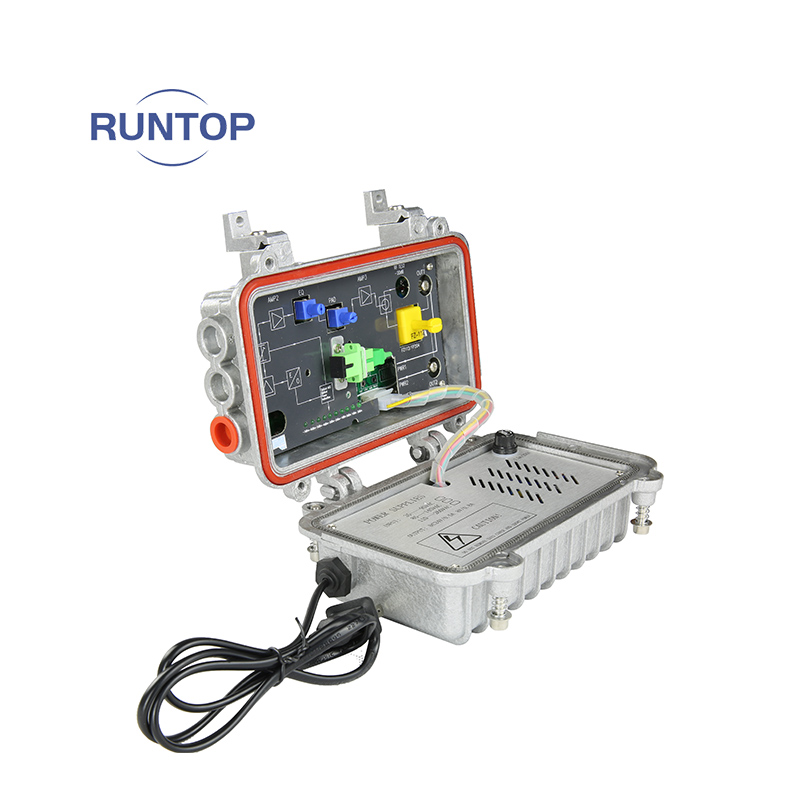
The integration of HFC communication networks and 5G infrastructure accelerates in recent years. Existing hybrid fiber coaxial resources are widely reused to construct integrated communication systems, reducing the overall investment of new network construction. Network designers need compatible hardware to realize seamless connection between original cable network facilities and 5G fronthaul equipment. Hfc Optical Node acts as an important connection hub in such converged networks. It cooperates with signal receiving equipment to realize bidirectional signal transmission, helping operators make full use of existing pipeline and fiber resources to speed up 5G large-scale layout.
5G fronthaul requires strict synchronization and low signal distortion. Unreasonable signal processing will cause data delay and packet loss, affecting user experience of mobile broadband services. Optimized circuit architecture inside high-gain receiving equipment can restrain harmonic distortion, support higher bandwidth transmission capacity. With the continuous promotion of 5G-A technology, higher requirements will be put forward on fiber interconnection systems. Cooperated with outdoor receiving devices and hybrid network optical nodes, the whole transmission system will provide scalable, low-cost solutions for future 5G and next-generation mobile communication fronthaul construction.