Technical definition and core differences
GPON (Gigabit-Capable PON)
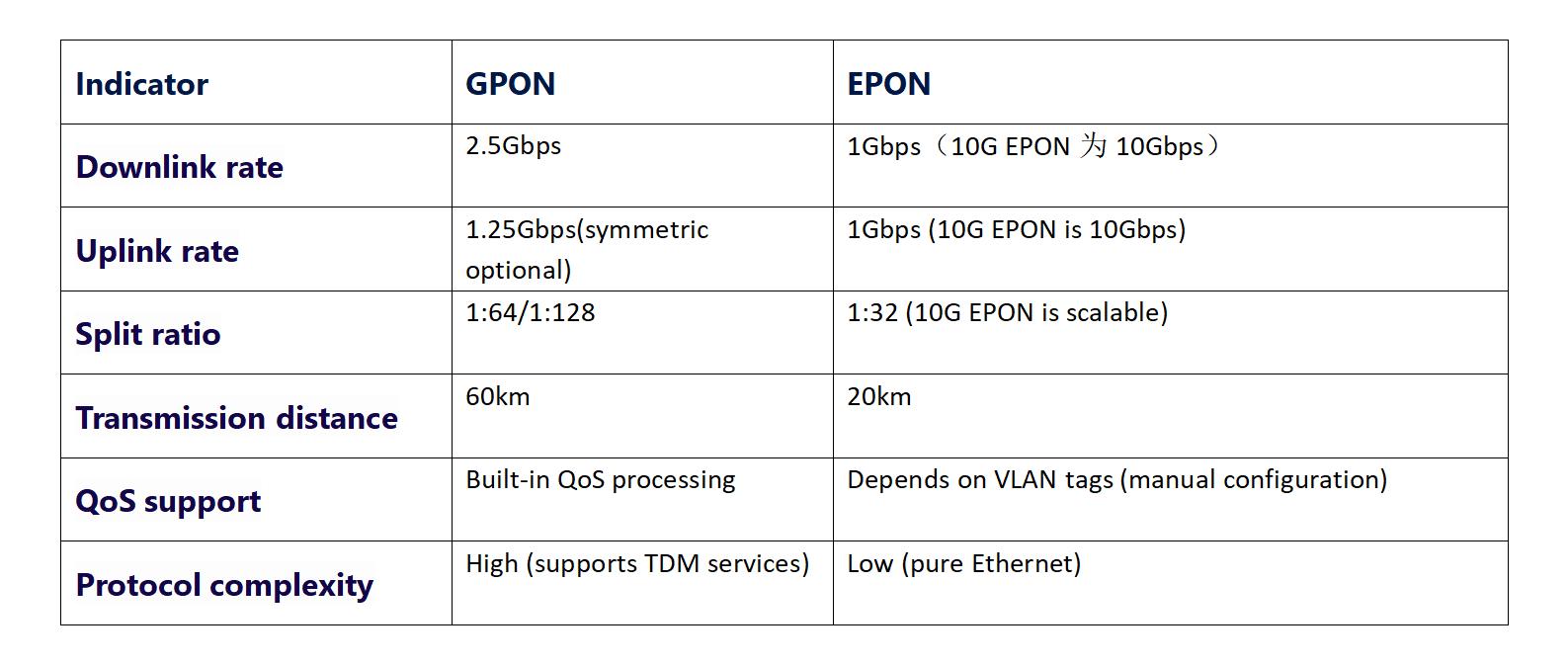
Standard: Based on ITU-T G.984 protocol, using GEM encapsulation and ATM/GFP dual protocol.
Rate: 2.5Gbps downstream, 1.25Gbps upstream (symmetric rate can be selected as 622Mbps).
Split ratio: supports 1:64 or 1:128, and the transmission distance can reach 60 kilometers.
Features: integrated QoS processing, supports triple-network integration (voice, video, data), complex protocol but powerful performance.
EPON (Ethernet PON)
Standard: Based on IEEE 802.3ah protocol, using Ethernet encapsulation.
Rate: 1Gbps symmetrical upstream and downstream (10G EPON can reach 10Gbps).
Split ratio: usually supports 1:32, and the transmission distance is about 20 kilometers.
Features: simple protocol, low cost, but QoS needs to rely on VLAN tags for manual configuration.
OLT (Optical Line Terminal)
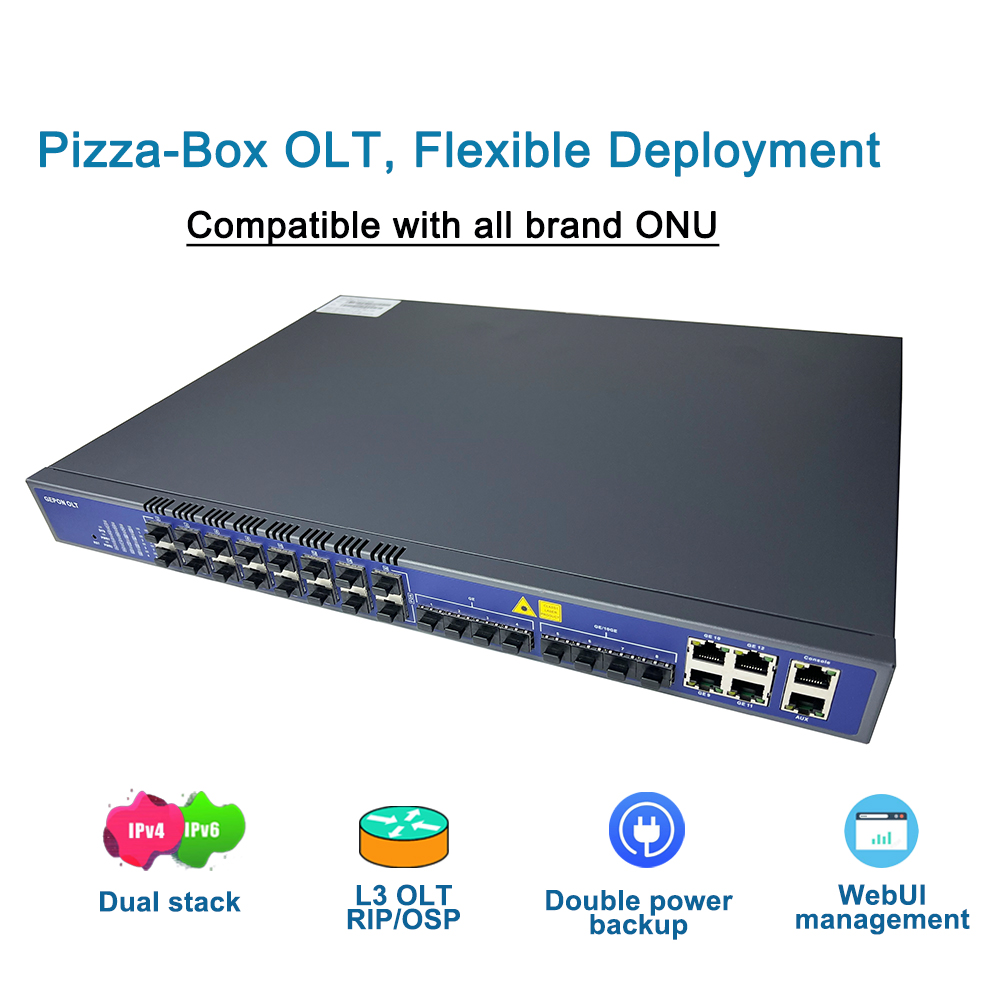
Function: As the core equipment of the PON system, it is responsible for optical signal conversion, bandwidth allocation, ONU management and network monitoring.
Composition: Including control board, power board, fan unit, upstream board, etc., supporting connection with core network and ONU.
Application scenarios
GPON
Large-scale network: such as city center and commercial district, supporting high-density user access.
Enterprise private network: scenarios that require high performance and multi-service support (such as video conferencing, multimedia content).
Telecom operators: Provide full-service access such as broadband Internet access, IP phone, high-definition video, etc.
EPON
Access network and small enterprise network: low cost, simple and easy to use, suitable for cost-sensitive environments.
Urban broadband access: Provide high-speed and stable network connection to meet large bandwidth requirements.
Mobile communication base station backhaul: fast and reliable transmission of large amounts of data, supporting the development of mobile networks.
OLT
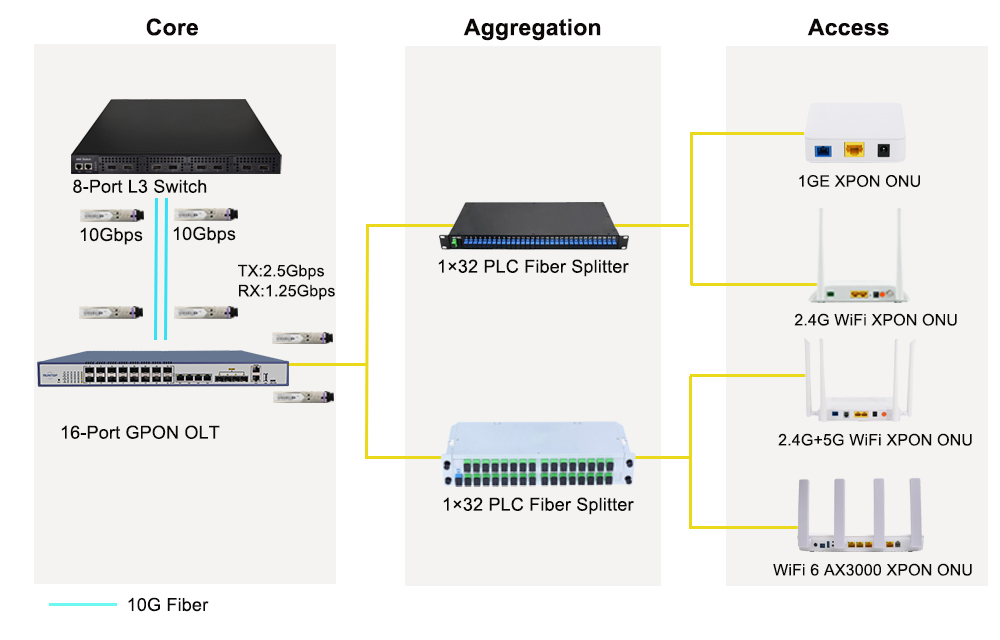
Core switching equipment: manage the entire PON network and realize ONU control, management and ranging.
Optical-electric integrated equipment: connected to the front-end switch, converted into optical signals, and interconnected with the user-side splitter through a single optical fiber.
Maintenance points
GPON
Board status check: confirm whether the board is in the specified slot, and re-plug or replace it if abnormal.
System log and alarm: monitor illegal login and abnormal operation, and adjust the access control list in time.
Uplink interface and PON port status: ensure that the port working mode is consistent, check the optical path and splitter.
Fan and computer room environment: confirm that the heat dissipation is normal, maintain the computer room temperature at 15℃~30℃ and the humidity at 40%~65%.
EPON
Optical module and splitter: regularly test the redundant ports of the splitter and check the connection status of the optical cable.
VLAN configuration: ensure that the QoS parameters match the core network to avoid bandwidth conflicts.
OLT
Hardware check: regularly check the status of the power supply, fan and control board.
Network management system: prevent virus infection, and regularly check the operation permissions and system logs.
Suitable buyers
GPON: Telecom operators, large enterprises, scenarios requiring high bandwidth and multi-service support.
EPON: Small and medium-sized enterprises, urban broadband access providers, cost-sensitive network builders.
OLT: All operators and enterprises that need to deploy PON networks, as a core device is indispensable.